How to Research Any Indian Destination Before You Go
A simple checklist for turning a vague travel idea into a real plan: when to go, how to reach, what to do, and what it will cost.
A simple checklist for turning a vague travel idea into a real plan: when to go, how to reach, what to do, and what it will cost.
Answer the same ten questions every time
Before any trip, work through the same short list: why go, when to go, how to reach, what to do, where to stay, what to eat, what it costs, the local context, the safety notes, and a rough day-by-day plan.
The destination changes, but the questions do not. Once you have a checklist you trust, planning a new place stops feeling overwhelming.
Get the practical details right
Pin down the things that derail trips: realistic budgets in rupees, how local transport actually works, opening days and timings, and whether the season you have chosen helps or hurts the experience.
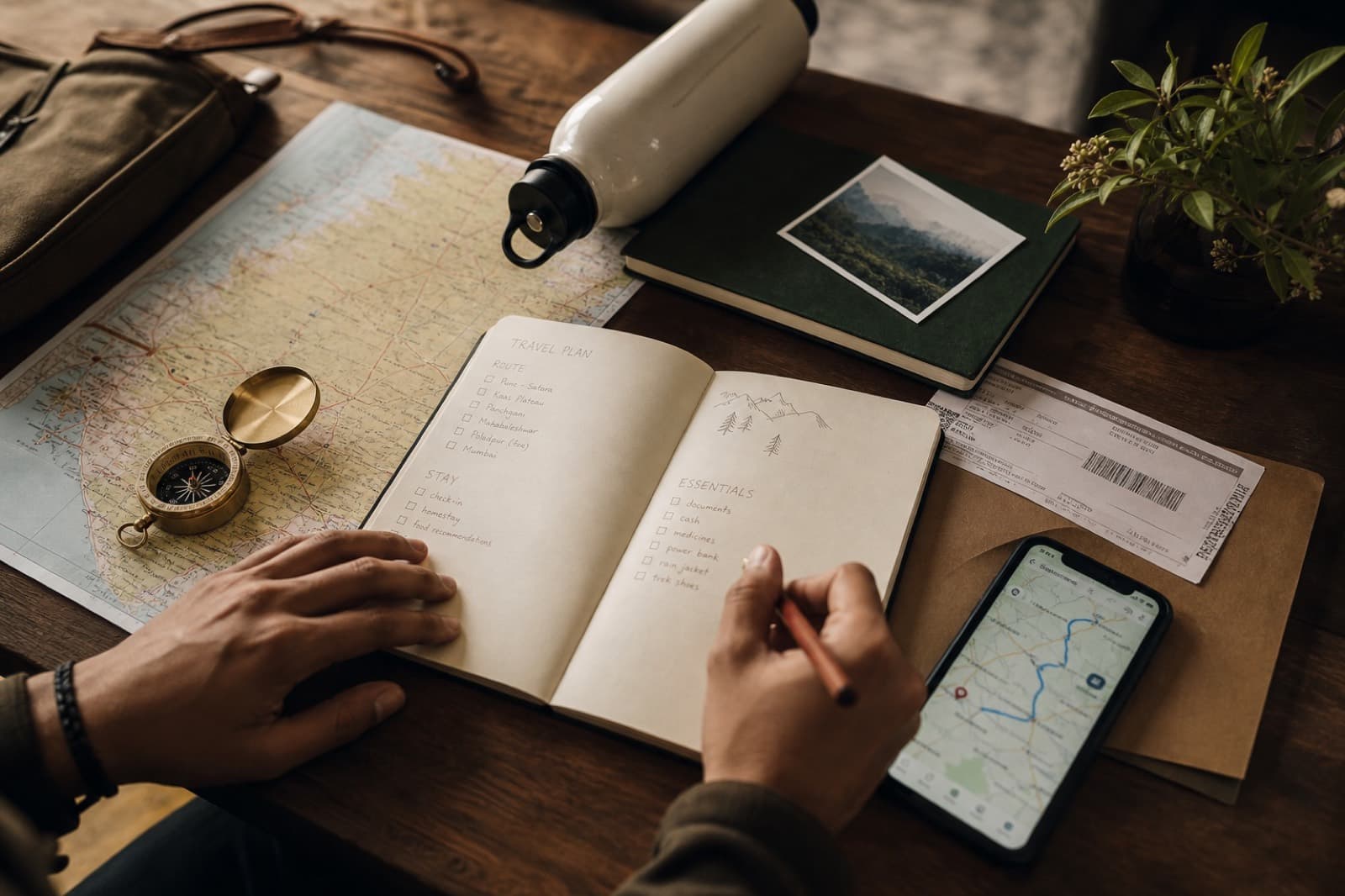
Write the plan down first, then add photos, map notes, and bookings as they firm up. A clear written plan is worth more than a folder of half-saved links.
Common questions
Frequently asked questions
How do I start researching a destination I know nothing about?
Answer the same ten questions every time: why go, when to go, how to reach, what to do, where to stay, what to eat, what it costs, the local context, the safety notes, and a rough day-by-day plan. The checklist stays constant; only the answers change.
What derails Indian trips most often?
Unrealistic budgets, misjudged seasons, and assumptions about local transport. Pin down costs in rupees, check whether your chosen month helps or hurts the destination, and confirm how you will actually move around before booking anything.
How far ahead should I plan a trip in India?
Trains and popular hill stations need 4–8 weeks of lead time in peak season; flights are best 3–6 weeks out. Permits for places like Northeast India or high-altitude routes need longer. Last-minute works only for road trips with flexible stays.