A Slow Traveller's Guide to Kerala's Temples
Beyond the famous names — how to visit Kerala's temples with an eye for ritual, architecture, dress codes, and the rhythm of the day.
Open guide index
Beyond the famous names — how to visit Kerala's temples with an eye for ritual, architecture, dress codes, and the rhythm of the day.
Temples are living spaces, not monuments
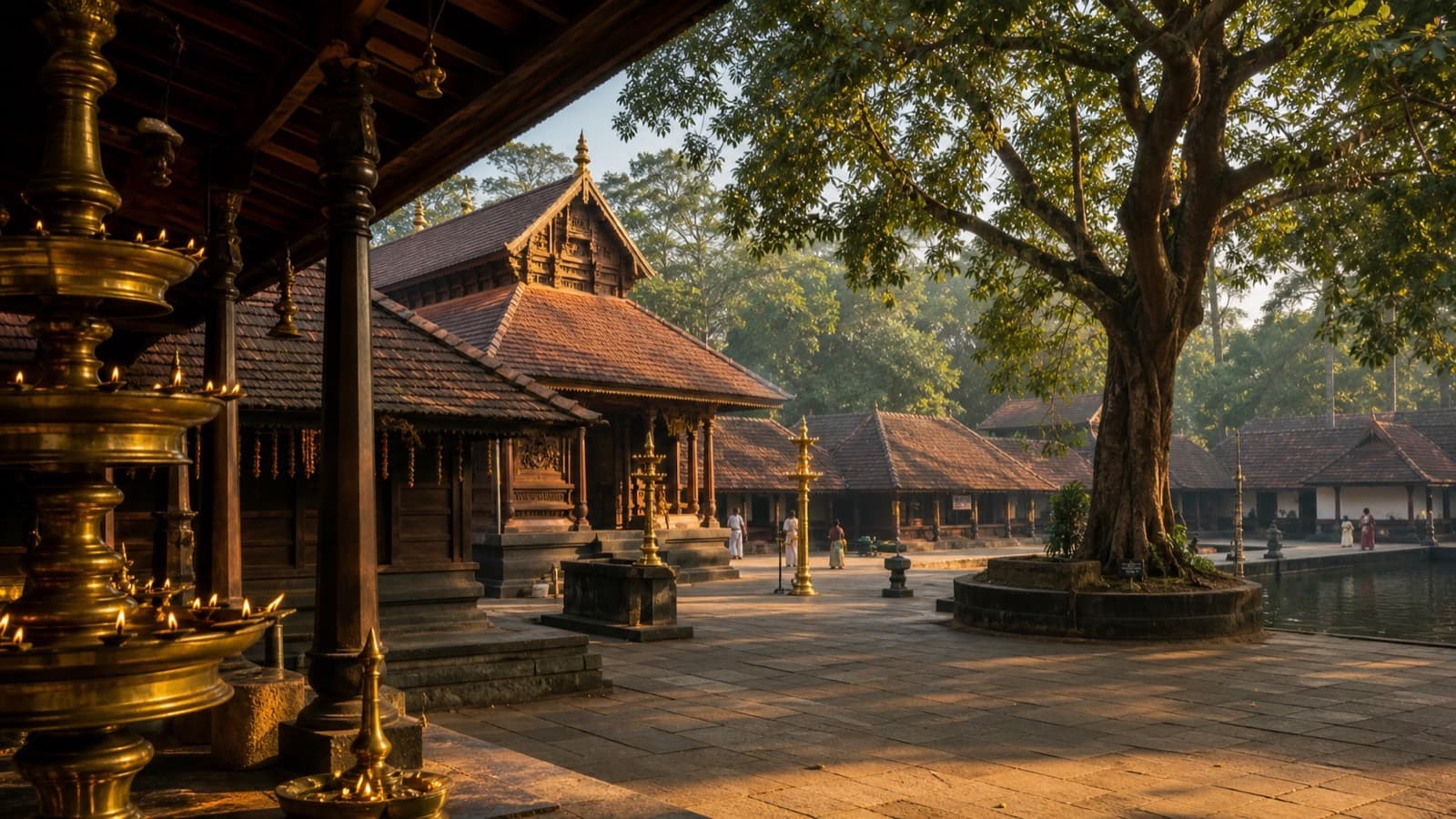
Kerala's temples — from the grandeur of Padmanabhaswamy in Thiruvananthapuram to small village shrines under banyan trees — are working places of worship first. The architecture is worth slowing down for: tiled roofs, wooden carvings, lamp-lined sanctums, and the koothambalams where temple arts are still performed.
Visit early and you will catch the temple at its most alive: oil lamps, the smell of incense and camphor, and a steady rhythm of devotees that has nothing to do with tourism.
Dress codes and timings to know
Many Kerala temples follow strict dress codes. Men are often required to remove shirts or wear a mundu, and women are expected to dress in a sari, set-mundu, or salwar — shorts and short skirts are usually not allowed. Some temples, including Guruvayur and Padmanabhaswamy, permit entry only to Hindus, so check before you plan a visit.
Temples typically close for a few hours in the afternoon, so plan around morning and evening darshan windows. Photography inside sanctums is frequently prohibited; look for signage or simply ask, and keep your phone away during rituals.
A respectful temple day
Leave your footwear at the designated stand, keep your voice low, and follow the clockwise flow of devotees around the sanctum. Carry a little cash for offerings and the footwear counter, and avoid leather items where they are discouraged.
Pair a temple visit with the life around it — the flower sellers, the meals served on banana leaves, the tank where people bathe before prayer. That context turns a quick photo stop into something you actually remember.